Stuck on Repeat: How American Politics Became a Doom Loop
Every few years, Americans wake up and realize something is badly broken.
It usually happens during a crisis — when institutions buckle, norms get shredded, and Congress sits on its hands while the executive branch does whatever it wants. We saw it after 2016. We're seeing it again heading into 2026. Suddenly, ideas that used to live in policy wonk journals — ranked-choice voting, open primaries, multi-member districts — start showing up in mainstream conversation.
And then, almost always, the moment passes.
An election happens. Power shifts. The most acute pressure lifts. What felt like a national emergency fades back into background noise, left to a handful of organizations to carry forward without the wind at their backs.
This is the loop American politics has been stuck in for decades: crisis, brief urgency, complacency, repeat. And with every turn of the cycle, the system gets a little weaker — a little closer to the edge.
The Real Problem Isn't Polarization. It's Volatility.
Polarization gets most of the blame, and it deserves some of it. But the deeper problem is what polarization has done to governance itself: it's made the entire system wildly unstable.
The United States is now functionally split down the middle — a near-permanent 50/50 divide with almost no give. The broad, overlapping coalitions that used to exist inside both parties — the kind that produced actual compromise — have hardened into opposing blocs with almost nothing in common. Small shifts in voter sentiment now produce massive swings in political power.
What used to look like democratic responsiveness now looks like whiplash.
When one party takes power, they don't adjust the policies of the last administration. They incinerate them. And when the other party comes back, they return the favor. Nothing sticks. Nothing builds. The whole enterprise resets every two to four years.
Congress has made this worse by surrendering its role as a check on the executive branch. Rather than guarding its constitutional prerogatives, it has, particularly under unified Republican government, functioned more as an extension of the presidency than a co-equal branch. That leaves even fewer internal guardrails inside the system itself.
The casualty isn't just good policy. It's predictability — and predictability is what makes a country trustworthy.
Allies hedge when they can't count on American consistency. Markets price in uncertainty when they can't project long-term policy direction. What took decades to build — a global order anchored by the assumption that the United States would show up and stay the course — is being quietly hollowed out by a system that changes its mind every election cycle. America remains extraordinarily powerful. But power without consistency is, over time, power that matters less.
So Why Is Reform So Hard?
If the problem is this clear, why hasn't it been fixed?
Three reasons, and they compound each other.
First, reform almost always gets born in the wrong conditions. It tends to emerge during moments of crisis, which means it tends to feel like a reaction to whoever caused the crisis. Structural reforms — changes to voting systems, redistricting, institutional guardrails — are supposed to be neutral. But once they're framed as a response to one party's behavior, the other side treats them as an attack. That framing is almost impossible to escape, and it makes reform politically toxic almost immediately.
Second, the legal terrain is brutal. Many of the reforms that could actually stabilize the system — in campaign finance, electoral structure, voting rights — have been pushed out of reach by Supreme Court decisions. Meaningful change increasingly requires constitutional amendments. And the amendment process, designed for a much smaller and less divided country, is nearly impossible to use in the current environment.
Third, and most fundamentally: even when reform passes, it doesn't last. In a 50/50 country, anything enacted on a razor-thin majority is treated as a temporary imposition, not a settled outcome. The other side waits for power to shift — and then undoes it. Alaska is the most instructive example. Its open primary and ranked-choice voting system has allowed centrist candidates like Senator Lisa Murkowski to survive without bending to partisan pressure. It's one of the most successful electoral reforms in the country. And it has been under constant attack from Republicans who see it as structurally disadvantaging them. Gerrymandering follows the same logic — an escalating arms race where each party tightens its grip on the rules of the game whenever it gets the chance, not because either side is uniquely villainous, but because the structure rewards it.
This is the duopoly at work. Both parties have a deep institutional interest in controlling the rules — even when those rules are corroding democratic legitimacy from the inside.
What Would Actually Work
The uncomfortable truth is that reform cannot succeed as a narrow project.
Any reform that passes with 50 percent plus one will be reversed when the other side hits 50 percent plus one. The only reforms that stick are the ones that are genuinely difficult to undo — and that means building support that extends well beyond a slim majority. Not 51 percent. Something closer to 60.
That kind of coalition doesn't happen by accident. It requires bringing in members of the opposition — reform-minded Republicans and independents willing to prioritize institutional health over short-term partisan advantage. It requires framing reform not as a rebuke of one party's behavior, but as a shared investment in a system that works for everyone. It requires treating stability itself as the goal, rather than a byproduct of winning.
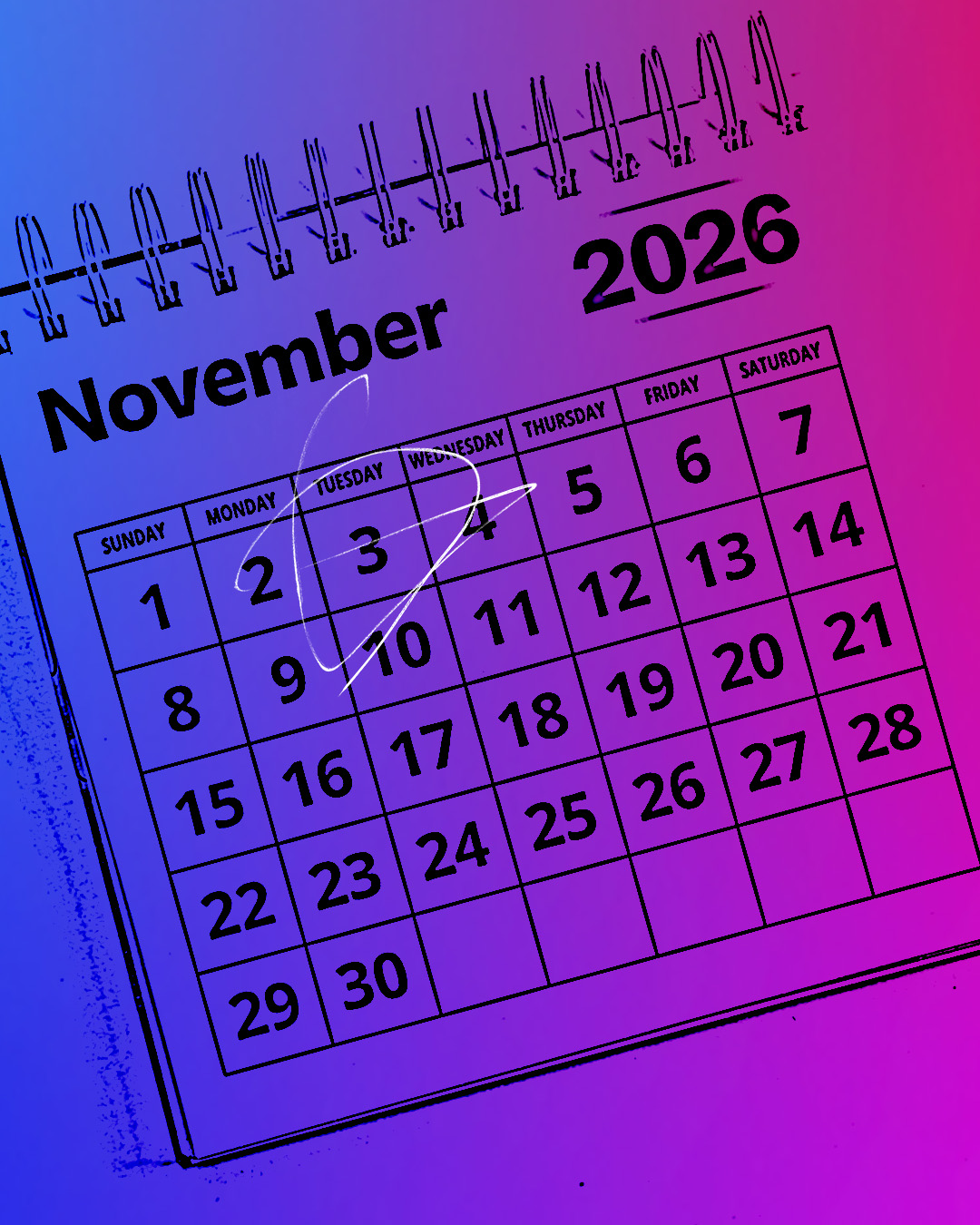
If Democrats retake the House or Senate in 2026, the temptation will be overwhelming: govern with your majority, move fast, maximize what you can while you can. That approach is understandable. It is also, based on recent history, a near-guarantee of the same cycle playing out again — a few years of one direction, followed by reversal, followed by exhaustion.
The independent movement understands this. Not because independents are naive about power, but because they've spent years watching both parties run the same play and wondering why the result never changes. The case for a cross-partisan bloc organized explicitly around institutional reform — whether formalized as a caucus or built through aligned priorities — isn't idealistic. It's the only approach with a realistic shot at producing change that actually holds.
The Window Is Open — But It Won't Stay Open
The American system was built to resist rapid change. For most of its history, that was a feature, not a bug. Stability was the point.
But there's a difference between a system that resists bad change and a system that can't produce necessary change. What we have now is increasingly the latter — a loop of dysfunction and partial correction that leaves the country more volatile with every iteration.
The ideas exist. The public appetite is there — 45 percent of Americans now identify as independents, an all-time high. What's been missing is the political will to build something durable enough to outlast the next election.
That's what this moment is about. Not just winning a cycle. Building something that lasts.
.avif)