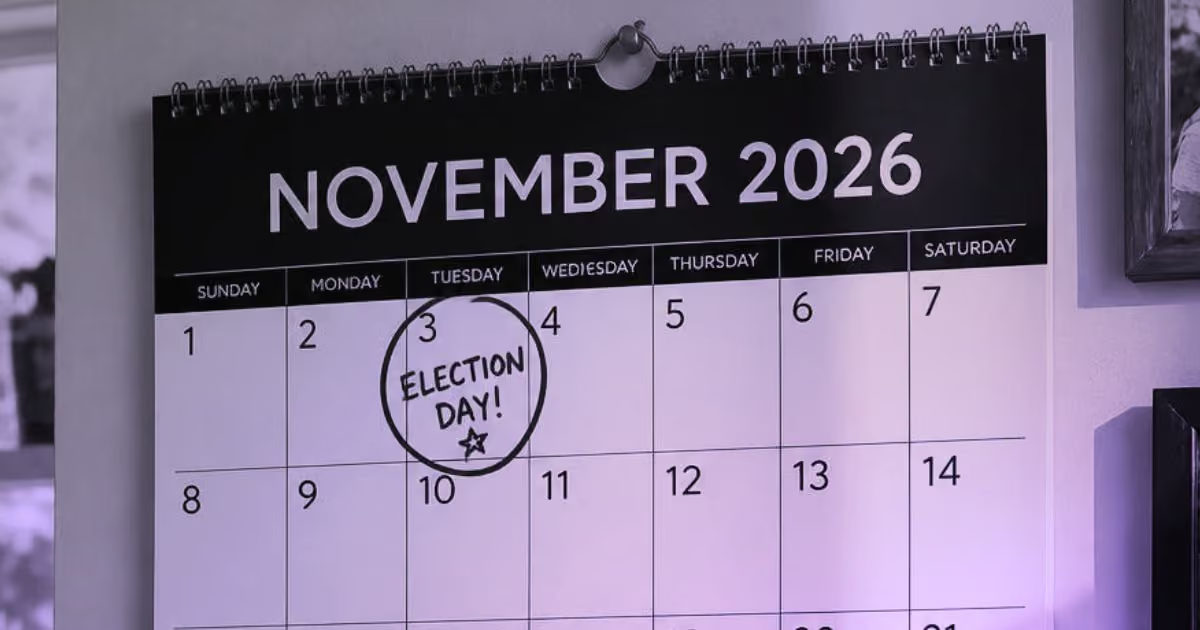
As returns begin rolling in on Election Night, the standard cable news commentary will inevitably reduce the nation’s political landscape to a binary choice: red versus blue. Yet, beneath the surface of traditional party cheerleading, a quiet shift is occurring across the American electorate. Voters are increasingly seeking choices beyond the traditional party apparatus, and this election cycle features an unprecedented number of independent and non-partisan candidates on ballots across the country.
This guide provides a roadmap for Election Night from an independent perspective—outlining when to expect state results, how to interpret early indicators of congressional control, and which key independent candidacies to watch as the numbers come in.
Election Night is a marathon, not a sprint. A common source of confusion is why some states report complete returns within hours of poll closures, while others require days to finalize their counts. The primary reason comes down to state-level administrative laws regarding when election officials are permitted to process (or "pre-canvass") mail-in and absentee ballots.
In states that allow election workers to open, verify, and process mail-in ballots prior to Election Day, initial returns reported shortly after polls close often include a significant volume of pre-counted absentee votes. In contrast, states that prohibit the opening of mail-in ballots until Election Day—or until polls officially close—face a substantial operational queue, as election workers must conduct signature verification and physical ballot processing in real time alongside in-person voting.
To track official, real-time election returns directly from state election authorities, you can consult the official portals maintained through the National Association of Secretaries of State Election Portal.
Understanding these legal differences prevents premature conclusions. Early leads in states with delayed mail processing can shift as absentee tallies are systematically added to the totals over subsequent days.
For voters interested in the balance of power in Washington, early-reporting states provide valuable clues long before western states report their final counts.
Because all 435 seats in the U.S. House of Representatives are up for election, national control is decided across dozens of competitive suburban and swing districts. Early signals often emerge from East Coast districts in states like Virginia, North Carolina, and New York. If early returns in these competitive suburban seats show a consistent shift toward one party compared to prior benchmarks, it often signals broader national trends that will replicate across Midwestern and Western districts later in the evening.
Control of the U.S. Senate usually hinges on a small subset of highly competitive states. Because Senate terms are staggered and statewide, early returns from key battlegrounds offer an immediate measure of national turnout dynamics. Watching the speed and direction of tallies in early-reporting Eastern and Midwestern battleground states will clarify whether the Senate majority will be narrow or if one party has secured a decisive path.
While national media outlets focus almost exclusively on major-party matchups, several notable independent and non-partisan candidates are challenging the establishment status quo in gubernatorial, U.S. Senate, and U.S. House races.
Executive offices at the state level have historically served as fertile ground for independent leadership, as voters often prioritize pragmatic administrative capability over partisan alignment.
Winning a statewide U.S. Senate seat without major-party backing is one of the most formidable challenges in American politics. Nevertheless, four races in particular represent a significant shift in statewide competitive dynamics:
Across 435 congressional districts, dozens of independent candidates are challenging major-party nominees. Two races deserve special attention:
To fully grasp what is happening in this election cycle, one must look at the macro data behind non-partisan ballot access.
Across the nation, 207 Independent candidates are printed on general-election ballots for U.S. Senate, U.S. House, or Governor.
This tally specifically counts candidates who achieved official ballot access without a major-party nomination, including:
To maintain analytical clarity regarding non-duopoly centrist and independent movements, this figure excludes:
In 2024, there were only 108 ballot-qualified candidates fitting these criteria for these offices. In a single election cycle, that figure has nearly doubled to 207 candidates.
This increase will ultimately represent the largest voter turnout and candidate selection pool for genuine Independents in modern American history. It reflects an expanding infrastructure of reform organizations, signature-gathering networks, and voters actively seeking options outside the two-party structure.
It is vital to temper expectations regarding immediate win-loss records. In single-member, first-past-the-post electoral systems, overcoming the financial and structural advantages of the major party apparatus is an extraordinary hurdle.
However, in the broader trajectory of political reform, reaching double digits in these statewide and congressional races is itself a major victory.
When an independent candidate captures 10%, 15%, or 30% of the vote in a major race, it shatters the illusion that major parties hold a monopoly on public support. It forces party strategists to address reform issues—such as open primaries, ballot access equity, and non-partisan redistricting—while demonstrating to future leaders that non-partisan campaigns are viable vehicles for public service.
Beyond raw vote counts, Election Night offers a window into how the national media handles the growing independent movement.
One key indicator to track throughout the evening is how often mainstream networks acknowledge non-duopoly candidates during their coverage. Historically, broadcast graphics and desk commentary skip over independent vote totals entirely, grouping them into an unspecified "Other" column.
In key races—especially prominent Senate contests where independents hold substantial market share—networks will be forced to break out these results explicitly. Pay attention to how often anchors discuss the impact of independent voters and non-partisan candidates on the national political landscape.
Media coverage itself is beginning to reflect the demand for non-partisan perspectives. On Election Night, network broadcasts will feature dedicated independent analysis. For example, tune in to to see Independent Joe Manchin deliver news analysis and commentary, providing a viewpoint unaligned with either major party headquarters.
When tuning in on Election Night, look beyond the simple red-and-blue electoral maps. Watch how long it takes state administrative systems to process every vote, monitor the early bellwether districts for congressional control, and keep a close eye on the performance of the 207 independent candidates on ballots across the nation.
Whether measured by double-digit vote shares, competitive multi-candidate finishes, or non-partisan commentary on national broadcasts, the story of this election is not just who wins the majority—it is how the American voter is reshaping the political landscape for cycles to come.